
Safety Assessment of Acoustic Insulation Cotton: Fire Resistance, Non-Toxicity and Child Protection
Abstract: This article aims to explore the specific sources of "hazards from soundproof cotton" and provides a practical evaluation guide. It analyzes the fire test standards (such as BS 476) and indoor air quality regulations (such as formaldehyde emissions) required for soundproofing materials, ensuring that engineering materials comply with building fire safety and environmental health regulations. To learn more about soundproofing basics, please refer to Introduction to Acoustic Soundproofing and Sound Insulation.
Table of Contents
- 1. Hazard Analysis of Traditional Soundproof Cotton: Dust, Toxicity, and Fire Risks
- 2. Fire Safety and Indoor Environmental Certification Indicators
- 3. Application Examples in Commercial and Public Spaces
- 4. Supplier Technical Support and Warranty Regulations
- 5. Frequently Asked Questions (FAQ)
- 6. References
Evaluation of Indoor Acoustic Materials: Physical and chemical safety are the primary indicators for selecting building materials.
1. Hazard Analysis of Traditional Soundproof Cotton: Dust, Toxicity, and Fire Risks
In early acoustic engineering, glass wool (fiberglass) and untreated polyurethane foam were widely used. However, with the elevation of environmental medicine and building safety standards, the hazards of traditional soundproof cotton have gradually received attention. Its potential risks mainly cover the following three aspects[1]:
- Respiratory and Skin Irritation: Traditional fiberglass releases minute fiberglass dust during cutting, installation, or natural aging. Inhalation can cause respiratory inflammation, while skin contact easily leads to redness, swelling, itching, and allergic reactions.
- Release of Harmful Chemical Gases (VOCs): Cheap acoustic foam often uses large amounts of chemical adhesives during the manufacturing process. In enclosed indoor environments (especially under the influence of sunlight or high temperatures), the material continuously releases free formaldehyde and Volatile Organic Compounds (VOCs), posing a health threat to the central nervous system and respiratory system with long-term exposure.
- Fire and Combustion Risks: Acoustic foam without flame-retardant treatment is a highly flammable material. Once it contacts an ignition source, it not only burns rapidly but also releases copious amounts of toxic dense smoke (such as hydrogen cyanide gas), severely hindering escape and rescue operations during a fire.
Material Safety Analysis: Phasing out traditional materials with risks of dust shedding and chemical volatilization.
2. Fire Safety and Indoor Environmental Certification Indicators
To avoid the aforementioned hazards of soundproof cotton, modern building regulations require an inspection of third-party certifications regarding physical and chemical safety when purchasing acoustic building materials. When evaluating materials, test reports issued by SGS or international ISO laboratories should be consulted (see Soundproofing Materials Guide for details):
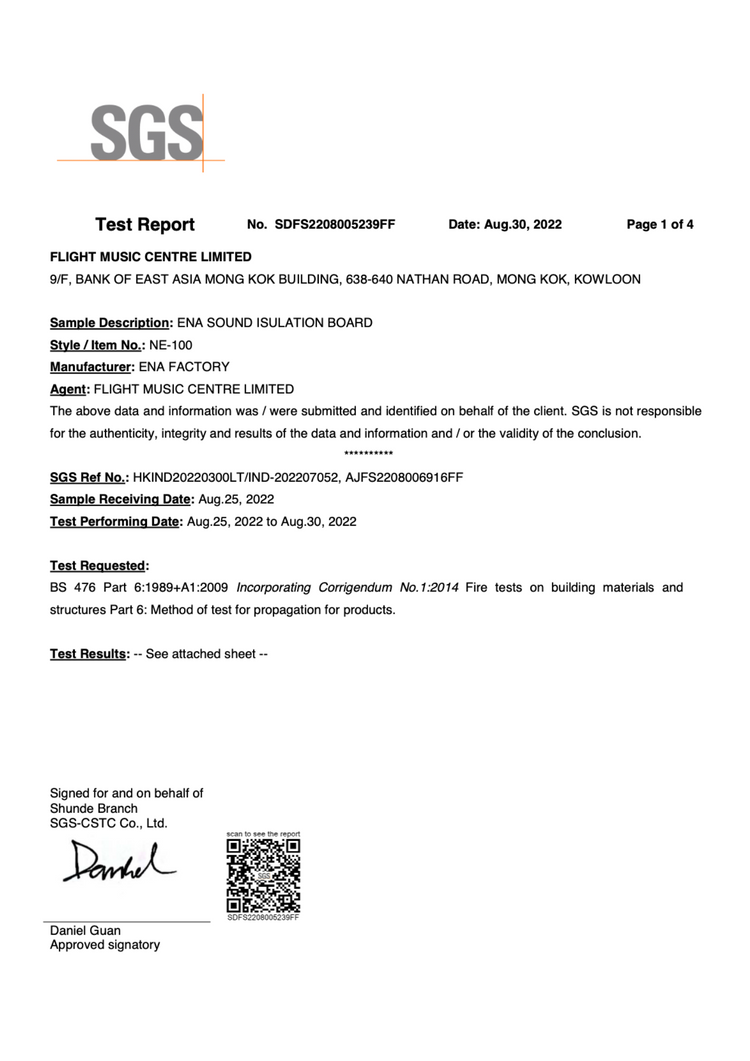
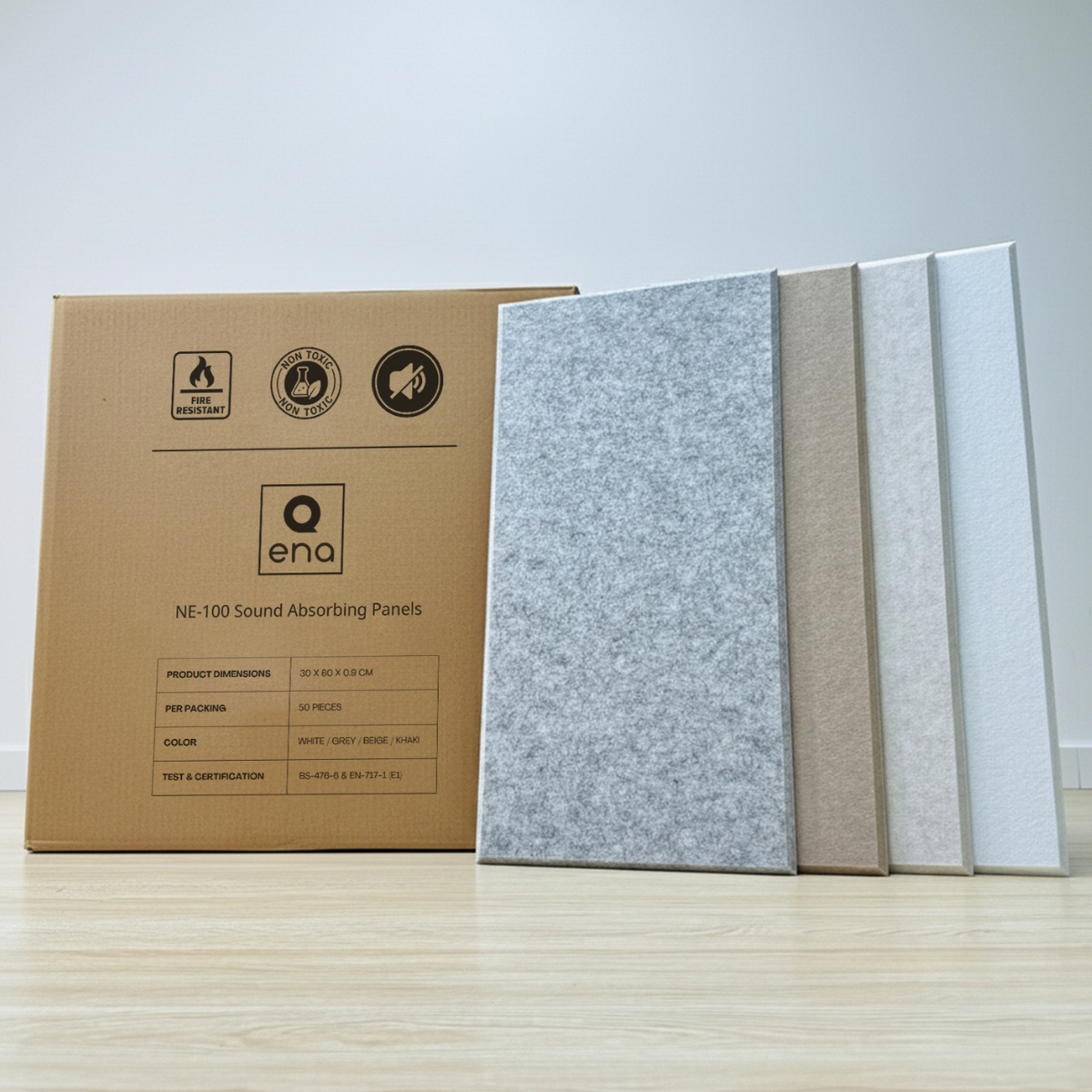
- Fire and Flame Retardant Standards: Replacing traditional flammable foam, modern polyester fiber materials must pass combustion tests. Taking ENA Soundproof Cotton NE-100 as an example, it passes the British standard BS 476-6 (Fire Propagation Test for Products), complying with the Hong Kong Fire Services Department's flame-retardant requirements for interior wall and ceiling building materials[2].
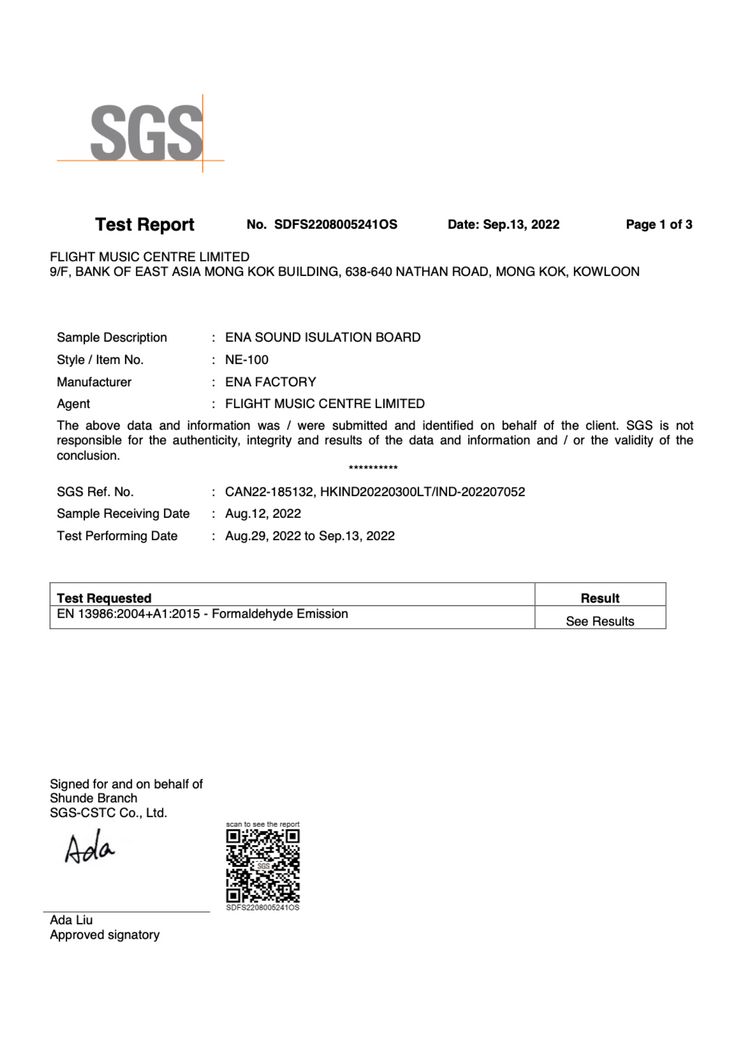
- Non-Toxicity and Formaldehyde Emission Standards: Materials applied indoors must comply with Indoor Air Quality (IAQ) guidelines. The test data for this material achieves the Super E0 level, meaning that free formaldehyde emissions are close to zero, eliminating the hazard of chemical gas emissions at the source.
- Physical Structural Safety: It utilizes a hot-press molding process instead of chemical gluing and contains no fiberglass components, ensuring that no irritating dust is generated during installation and use.
Third-Party Certification Testing: Ensuring materials comply with fire safety and Indoor Air Quality (IAQ) regulations.
3. Application Examples in Commercial and Public Spaces
The acceptance standards for building materials in large commercial spaces and public facilities serve as a reference for evaluating material stability. The procurement procedures for hotels, schools, and medical institutions usually encompass multiple audits of acoustic data, fire ratings, and non-toxicity certificates.
Acoustic Treatments for Hotels and Educational Facilities
In commercial applications in Hong Kong, venues such as the Mandarin Oriental Hotel in Central, W Hotel in Kowloon, and InterContinental Hotel in Tsim Sha Tsui have applied ENA Soundproof Cotton NE-100 in guest rooms and corridor areas to control sound transmission between adjacent spaces. Data shows it possesses a Noise Reduction Coefficient (NRC) of 0.3 and can provide approximately 15 decibels of attenuation. (See Hong Kong Soundproofing Cases and Practical Tips for details)
Furthermore, the music classrooms of the Vocational Training Council (VTC) and Hong Kong International School also use such tested materials. In educational spaces, the Super E0 non-toxic certification ensures air quality within enclosed spaces, preventing school children from exposure to dust and formaldehyde hazards. (To explore more application scenarios, please refer to Music Studio Soundproofing and School and Hotel Soundproofing)

Material Structure and Stability: Polyester fiber hot-pressing process replaces traditional chemical gluing.
4. Supplier Technical Support and Warranty Regulations
Besides the physical and chemical data of the materials themselves, the technical support and after-sales regulations provided by the supplier are key links in project execution, directly affecting the final acoustic effectiveness and safety. (See Residential Soundproofing Solutions for details)
- Product Warranty Terms: Regulations covering physical degradation and performance decline of materials. Suppliers should establish corresponding warranty periods for soundproofing materials to guarantee acoustic stability within the specified lifespan, preventing the risk of materials aging and regenerating dust shedding.
- Technical Installation Support: The effectiveness of acoustic materials highly depends on airtightness and installation methods. Suppliers should provide construction guidelines, including the selection of adhesives meeting non-toxic standards and edge-sealing techniques to reduce sound diffraction.
- Return and Exchange Mechanism: Establish a clear return and exchange process. If a batch of materials has physical defects or does not meet certification standards, it can be replaced within the specified timeframe to ensure that project progress and safety standards are not compromised. (See Commercial Soundproofing: Offices and Restaurants for details)
5. Frequently Asked Questions (FAQ)
What are the main hazards of traditional fiberglass soundproof cotton?+
What is the significance of Super E0 certification for soundproofing materials?+
Why do some acoustic foams pose a fire risk?+
What is the difference in physical function between soundproof panels and acoustic cotton?+
Will installing soundproof cotton indoors affect existing ventilation or insulation designs?+
6. References
[1] World Health Organization (WHO). (2000). Air Quality Guidelines for Europe (2nd ed.). WHO Regional Publications. (Health implications of synthetic vitreous fibers and VOC emissions in indoor environments).
[2] British Standards Institution. (1989). BS 476-6: Fire tests on building materials and structures - Method of test for fire propagation for products. (Standard for evaluating fire propagation of acoustic lining materials).
[3] Long, M. (2014). Architectural Acoustics (2nd ed.). Academic Press. (Standards and practices for safe acoustic treatments in commercial and hospitality environments).
© 2026 [Ivan Yip, ENA Acoustic]. All Rights Reserved.
4 comments
@KK.Leung: 請問尺寸可以選擇嗎?
回答:可以的,我們有30x60cm 現成的尺寸,也可以訂其他尺寸。
請問尺寸可以選擇嗎?
@Emily: 請問這種隔音板有沒有實測的影片看看?
回答:有的,可以參考我們的隔音板產品頁。
請問這種隔音板有沒有實測的影片看看?