
School Soundproofing Projects: Case Review and Technical Analysis
Abstract: The goal of school soundproofing engineering is to control the Speech Transmission Index (STI) and background noise levels of a space. Based on the physical conditions of different campus spaces, this article analyzes Ena Acoustic's soundproofing and reverberation control cases in local tertiary institutions and international schools, exploring the practical configuration specifications of sound-absorbing materials and mass impedance materials. To learn more about acoustic principles, please refer to Introduction to Acoustic Soundproofing and Sound Insulation.
Table of Contents
- 1. Lecture Halls and Large Classrooms: Indoor Reverberation Time Control
- 2. Music Rooms and Multi-Purpose Spaces: Structure-Borne and Airborne Sound Insulation
- 3. Libraries and Study Areas: Low-Frequency Background Noise Attenuation
- 4. Student Dormitories and Staff Areas: Door/Window Airtightness and Privacy Protection
- 5. Fire Safety and Indoor Air Quality Regulations for Educational Spaces
- 6. Frequently Asked Questions (FAQ)
- 7. References
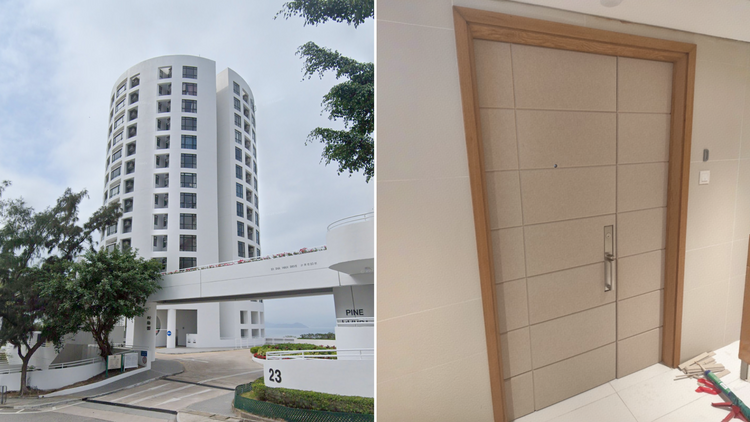
In 2025, ENA Acoustic designed and constructed soundproofing engineering for The University of Hong Kong.
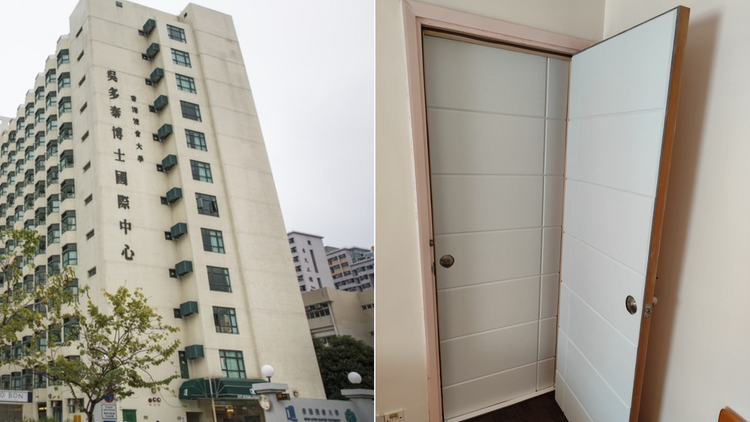
In 2023, ENA Acoustic designed and constructed soundproofing engineering for the City University of Hong Kong.
1. Lecture Halls and Large Classrooms: Indoor Reverberation Time Control
In large lecture spaces with hard reflective surfaces (such as concrete walls and whiteboards), sound wave reflection leads to prolonged indoor Reverberation Time (RT60), which in turn degrades speech intelligibility during teaching[1].
Configuration of Sound-Absorbing Materials
For the large classrooms at The University of Hong Kong and the City University of Hong Kong, acoustic treatments focused on reducing reflected sound. The engineering utilized ENA Soundproof Cotton laid on the ceilings and the upper halves of both side walls. This porous material (NRC=0.3) converts sound energy, shortening the retention time of sound waves within the space, ensuring that back-row seats also receive clear acoustic reception, and reducing reliance on amplification equipment and sound spillover. (See Soundproofing Materials Guide for details)
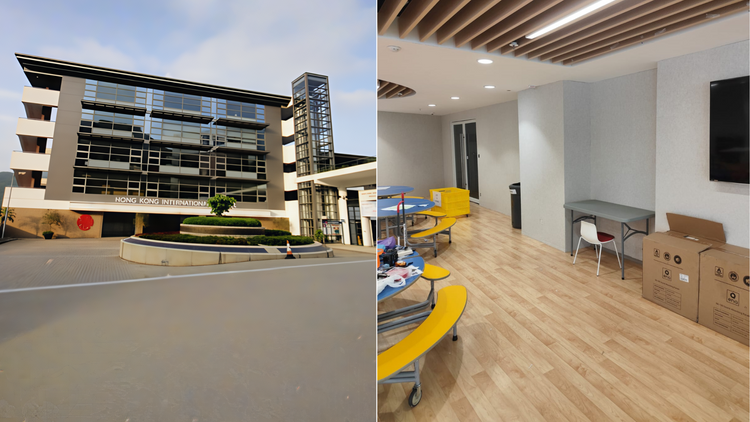
In 2024, ENA Acoustic designed and constructed soundproofing engineering for Hong Kong International School.
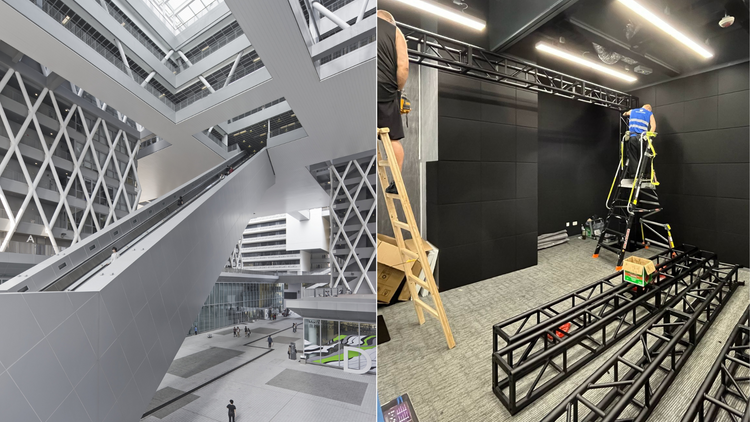
In 2023, ENA Acoustic designed and constructed soundproofing engineering for the Hong Kong Design Institute.
2. Music Rooms and Multi-Purpose Spaces: Structure-Borne and Airborne Sound Insulation
Music rooms and activity spaces generate high-decibel instrumental sounds and low-frequency vibrations. School soundproofing planning for these types of spaces requires simultaneously cutting off airborne sound and structure-borne sound (such as floor slab vibrations caused by percussion instruments).
Mass Impedance and Room-in-Room Design Concept
In specific facilities at the Hong Kong International School and Hong Kong Design Institute (HKDI), the high-density ENA Soundproof Blanket NE200 (STC=23) was installed within the inner layers of the walls. According to the Mass Law[2], this material provides sufficient acoustic impedance to limit low-to-mid frequency sound waves from penetrating into adjacent regular classrooms. Entrances and exits were replaced with soundproof doors equipped with automatic drop-down bottoms to ensure spatial airtightness. (See Music Studio Soundproofing for details)
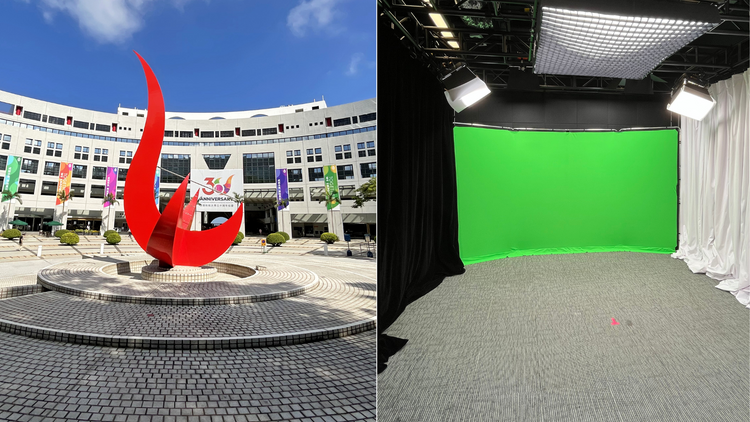
In 2025, ENA Acoustic designed and constructed soundproofing engineering for the Hong Kong University of Science and Technology.
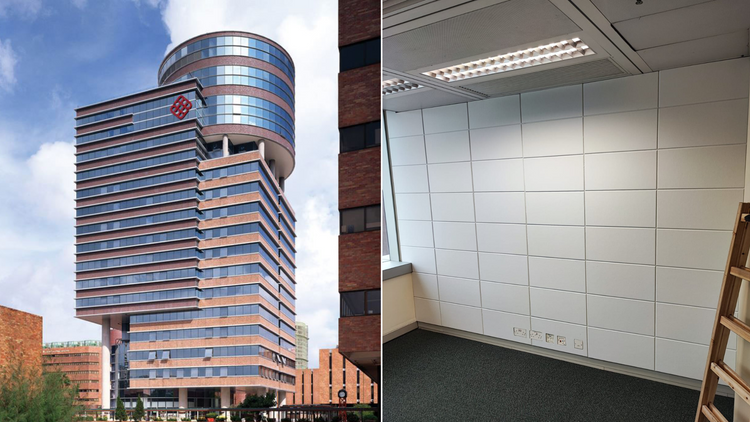
In 2026, ENA Acoustic designed and constructed soundproofing engineering for The Hong Kong Polytechnic University.
3. Libraries and Study Areas: Low-Frequency Background Noise Attenuation
Academic libraries and study rooms have an extremely low tolerance for Background Noise (NC). External traffic flow and the operational sounds of internal electro-mechanical equipment (such as central air conditioning) are the primary factors affecting environmental tranquility.
Window Openings and Floor Slab Treatments
Some study spaces at the Hong Kong University of Science and Technology and The Hong Kong Polytechnic University are located facing streets or adjacent to plant rooms. In the engineering, soundproof curtains (STC 16.6-36.6) without chemical coatings were deployed over large glass window areas to physically mask and attenuate high-frequency external traffic sounds using mass. Simultaneously, composite soundproofing and sound-absorbing materials were laid on the walls adjacent to the plant rooms to reduce low-frequency conduction caused by air conditioning equipment.
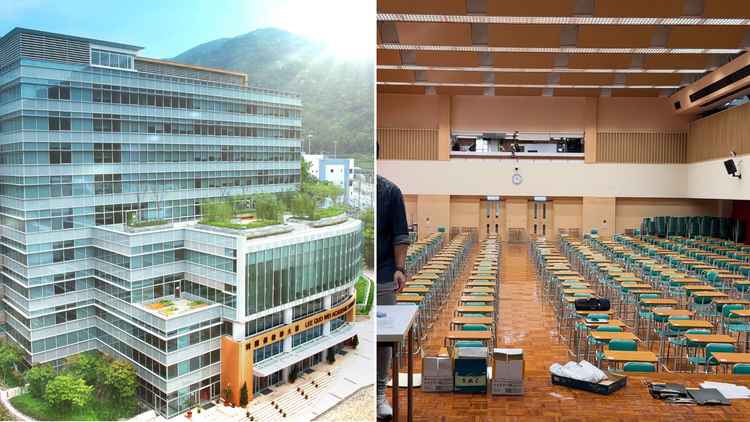
In 2024, ENA Acoustic designed and constructed soundproofing engineering for The Hang Seng University of Hong Kong.
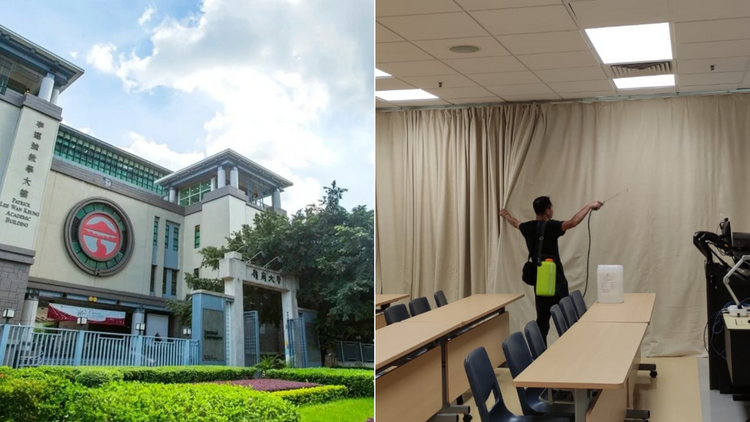
In 2026, ENA Acoustic designed and constructed soundproofing engineering for Lingnan University.
4. Student Dormitories and Staff Areas: Door/Window Airtightness and Privacy Protection
The acoustic treatment of student dormitories and staff offices focuses on personal privacy protection and sound isolation from adjacent spaces. The gaps around door leaves are often the primary paths for sound leakage.
Door Leaf Airtightness Upgrades
In the dormitory and administrative area projects at The Hang Seng University of Hong Kong and Lingnan University, traditional wooden doors were replaced with soundproof doors (STC 35) featuring soundproof interlayers. The door frames are equipped with silicone sealing strips to reduce the infiltration of corridor foot traffic and conversational sounds, providing acoustic isolation that meets residential standards. (The treatment principles for such spaces are similar to hotel guest rooms; see School and Hotel Soundproofing and Residential Soundproofing Solutions for details)
5. Fire Safety and Indoor Air Quality Regulations for Educational Spaces
In addition to meeting acoustic data requirements, the physical and chemical safety of materials in school soundproofing engineering is also strictly regulated. Traditional fiberglass and flammable foam are no longer suitable for modern educational facilities due to risks of dust shedding and toxic gas volatilization[3].
The ENA series acoustic materials selected for the aforementioned institutional projects all possess third-party inspection certifications. Regarding fire safety, they meet the BS-476 flame-retardant standards set by the Hong Kong Fire Services Department for indoor building materials; regarding chemical safety, the materials reach the Super E0 formaldehyde emission level. The characteristics of no dust shedding and no free formaldehyde ensure the respiratory health of students and staff in enclosed, air-conditioned environments.
6. Frequently Asked Questions (FAQ)
Why do school classrooms need to control "Reverberation Time"?+
Is relying solely on acoustic cotton sufficient for soundproofing a school music room?+
What safety certifications should soundproofing materials applied in educational facilities possess?+
How can noise from student dormitory corridors be effectively blocked?+
7. References
[1] Bradley, J. S. (1986). Speech intelligibility studies in classrooms. Journal of the Acoustical Society of America, 80(3), 846-854. (Acoustical requirements and reverberation control in educational spaces).
[2] Bies, D. A., & Hansen, C. H. (2009). Engineering Noise Control: Theory and Practice (4th ed.). CRC Press. (Application of mass law for low-frequency sound transmission loss).
[3] World Health Organization (WHO). (2010). WHO Guidelines for Indoor Air Quality: Selected Pollutants. (Air quality standards for educational facilities and VOC emissions).
© 2026 [Ivan Yip, ENA Acoustic]. All Rights Reserved.