
Soundproofing Materials: Types, Uses and Principles
Abstract: This article explores six common soundproofing decoration materials and systems, covering acoustic cotton, mass-loaded blankets, shock-absorbing carpets, soundproof curtains, airtight doors, and double-glazed windows. By analyzing their mass law and sound absorption mechanisms, it provides a practical basis for planning architectural acoustic treatments.
Table of Contents
- 1. Acoustic Cotton: Handling Cavity Resonance and Sound Wave Absorption
- 2. Soundproof Blanket: Penetration Blocking Based on the Mass Law
- 3. Soundproof Carpet: Controlling Structure-Borne Sound in Floors
- 4. Soundproof Curtains: Acoustic Impedance and Blackout at Openings
- 5. Soundproof Doors: Enhancing Entrance Airtightness and STC Values
- 6. Double-Glazed Windows: Blocking Outdoor High-Frequency Traffic Noise
- 7. Frequently Asked Questions (FAQ)
- 8. References
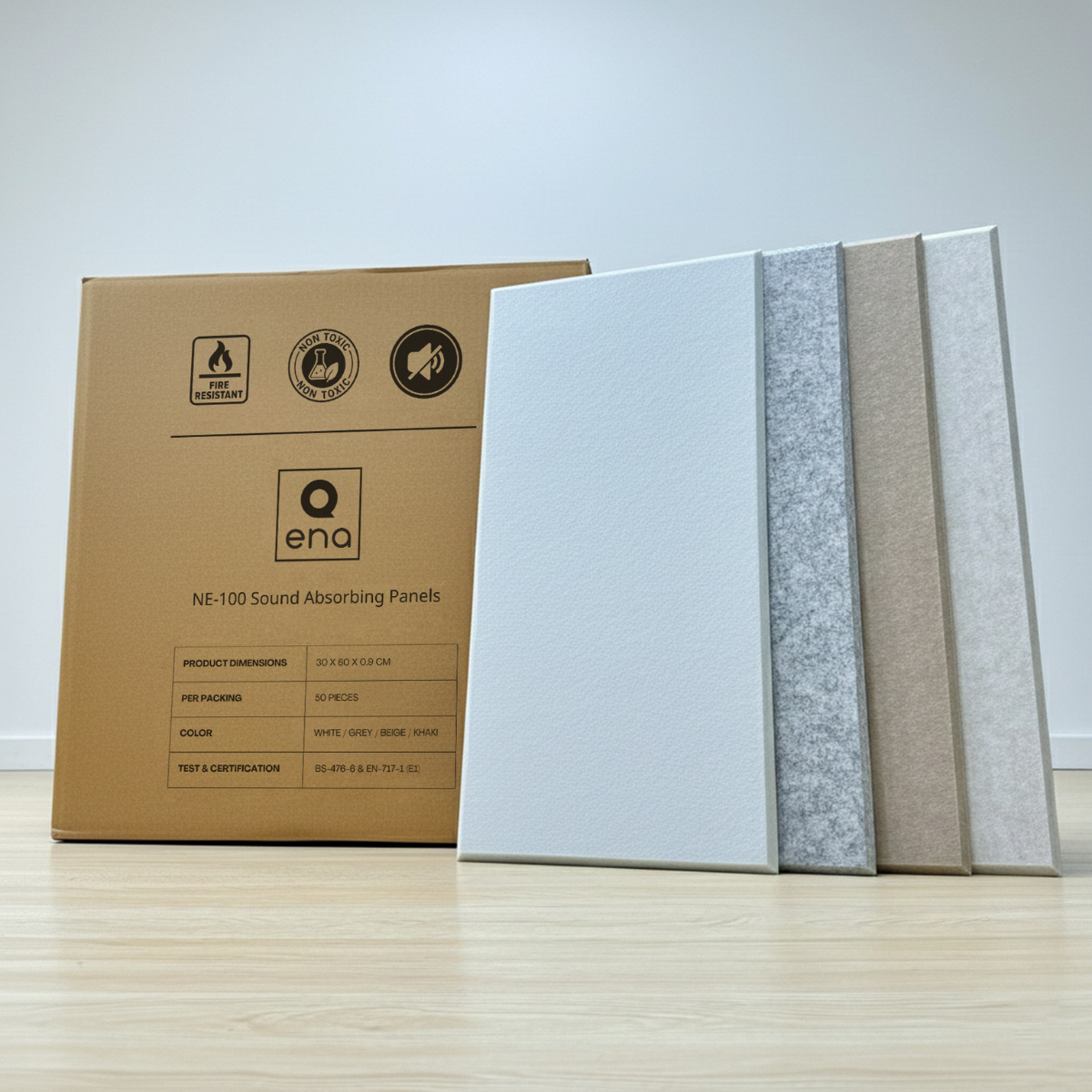
ENA NE-100 Acoustic Cotton
1. Acoustic Cotton: Handling Cavity Resonance and Sound Wave Absorption
When dealing with internal wall cavities or indoor echoes, porous structural materials are a common choice. As sound waves enter the interior of acoustic cotton, they generate friction with the material fibers; according to acoustic physical principles, this converts the kinetic energy of sound waves into minute heat energy, thereby reducing reflection and resonance[1].
ENA NE-100 Acoustic Cotton has a set thickness of 9mm. Laboratory data shows a Noise Reduction Coefficient (NRC) of 0.75. The material passes the BS-476-6 fire test and meets the Super E0 formaldehyde emission standard. In practice, it is mostly filled inside lightweight partition walls or laid above ceilings to reduce sound interference between adjacent rooms.
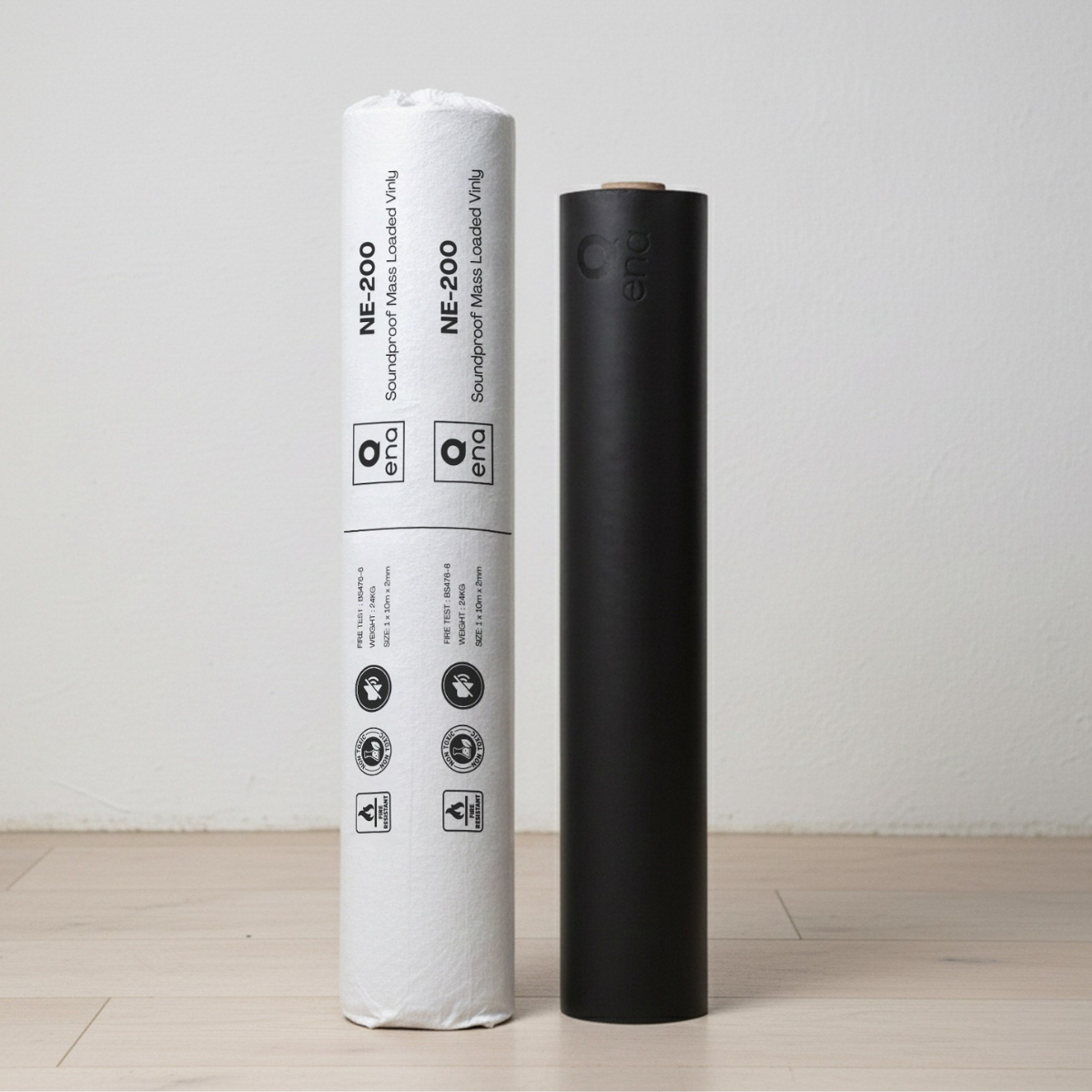
ENA NE-200 Soundproof Blanket
2. Soundproof Blanket: Penetration Blocking Based on the Mass Law
To block sound from penetrating walls or floors, relying solely on sound-absorbing cotton is insufficient. The "Mass Law" in acoustics indicates that the ability to block airborne sound is directly proportional to the surface density of the barrier[2]. Soundproof blankets belong to Mass Loaded Vinyl (MLV) materials.
ENA NE-200 Soundproof Blanket possesses high-density physical characteristics. Test data indicates a Sound Transmission Class of STC 23, capable of blocking approximately 27 decibels of noise. This material is often laid flat under floors or alternated with wood panels and acoustic cotton to increase the weight and acoustic impedance rate of the overall partition structure.
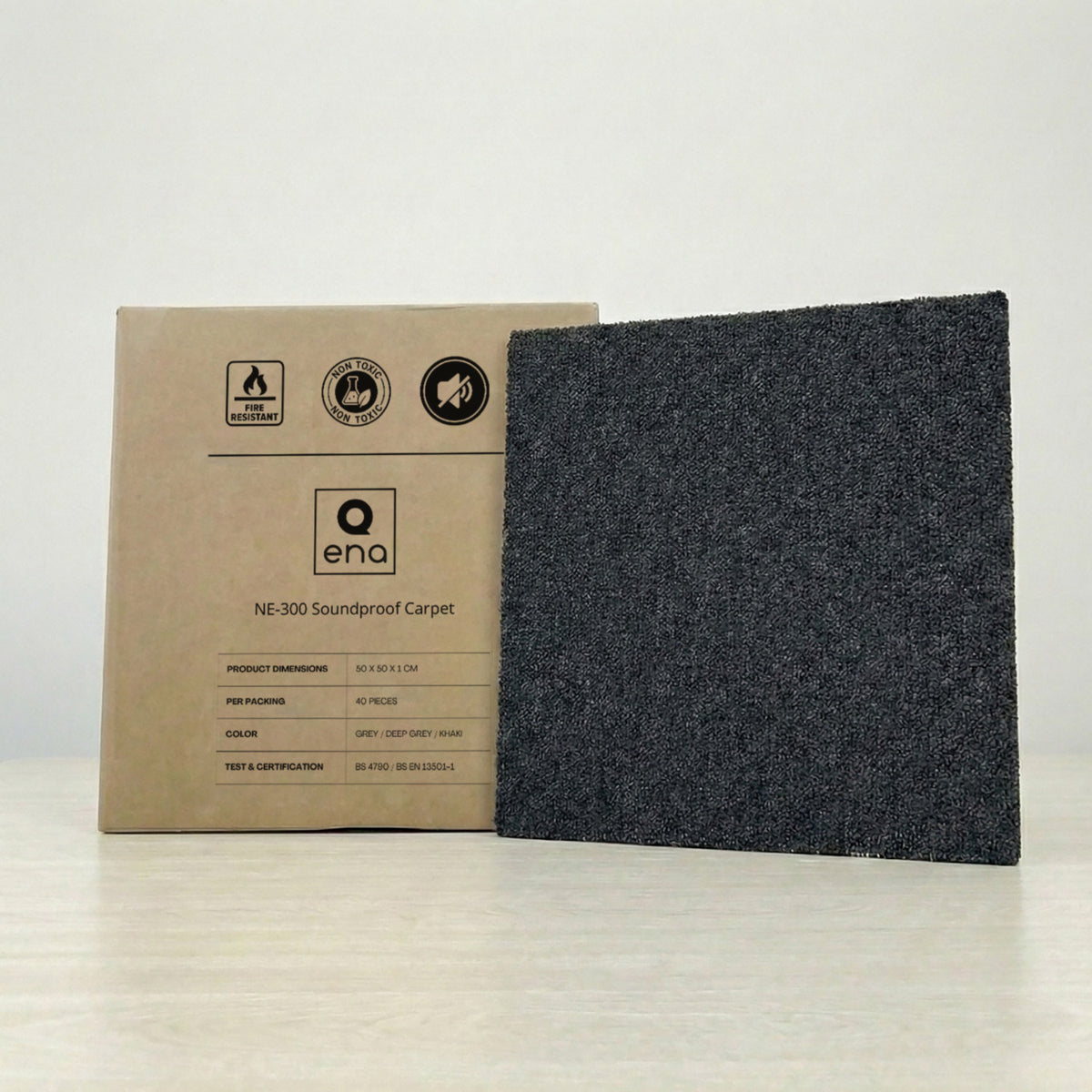
ENA NE-300 Soundproof Carpet
3. Soundproof Carpet: Controlling Structure-Borne Sound in Floors
Footsteps and dragging furniture sounds belong to structure-borne sound. When an object strikes a floor slab, the vibration is transmitted directly through the concrete to the lower level. Cutting off the contact surface of such vibrations is the principle for handling this type of noise[3].
ENA NE-300 Soundproof Carpet incorporates a 0.7 cm shock-absorbing cushion layer at the bottom of the fabric. When physical impact is applied, the shock-absorbing layer absorbs a portion of the impact force, thereby reducing the vibration frequency transmitted to the floor slab. The product complies with fire safety regulations and is mostly laid in residential living rooms and office corridors.
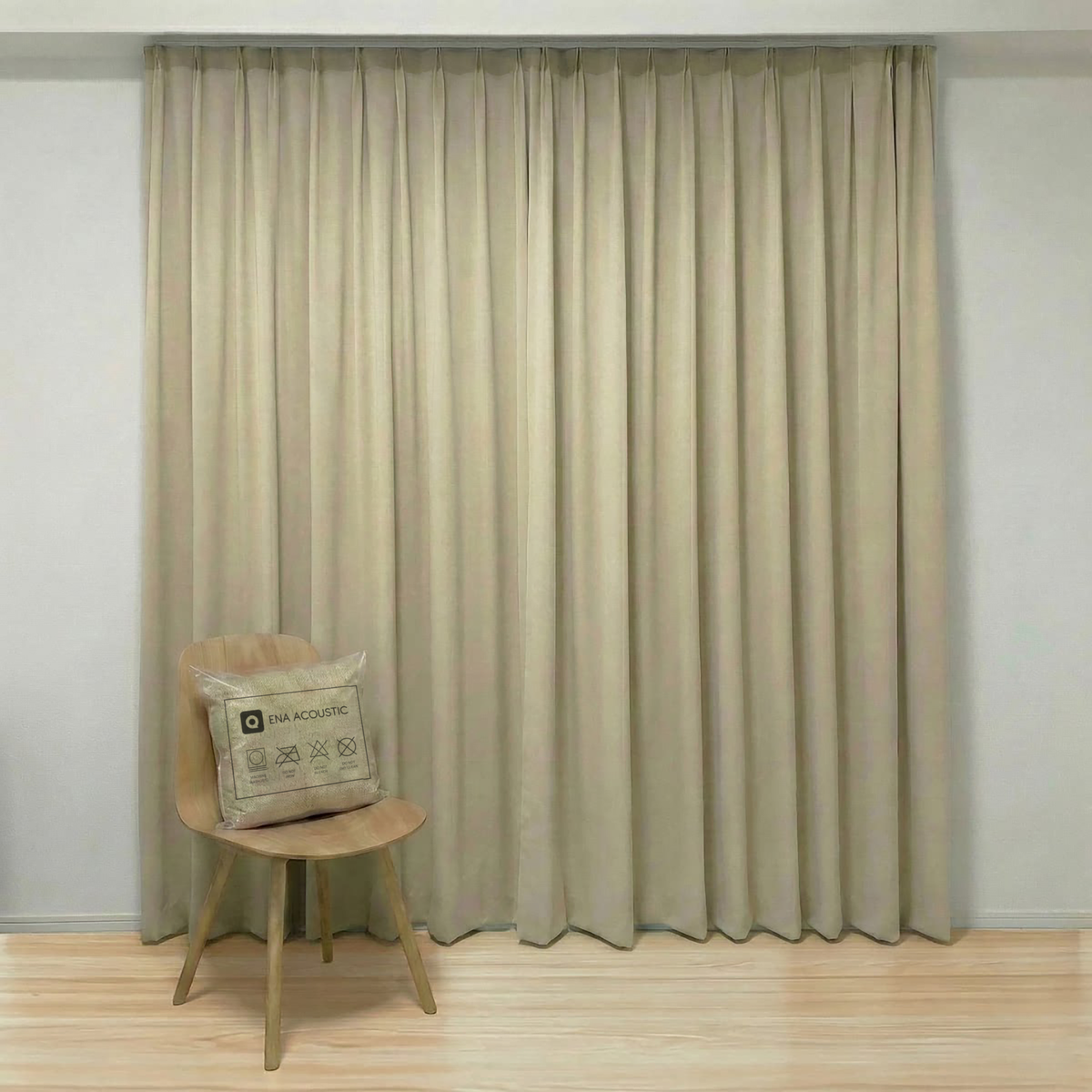
ENA Silence Soundproof Curtains
4. Soundproof Curtains: Acoustic Impedance and Blackout at Openings
The exterior glass windows of buildings are often the weak points for airborne sound transmission. In situations where altering the exterior wall structure is not possible, increasing the mass of the shielding material at the opening is an alternative treatment method.
ENA Silence Soundproof Curtains discard chemical blackout coatings in favor of a multi-layer physical sandwich structure. Experimental tests show its STC value ranges between 16.6 and 36.6. In addition to providing a 100% blackout effect, the heavy fabric structure can reflect a portion of traffic noise transmitting from outside the window. When hanging, it is necessary to ensure the encompassing nature around the curtains to minimize space for sound diffraction.
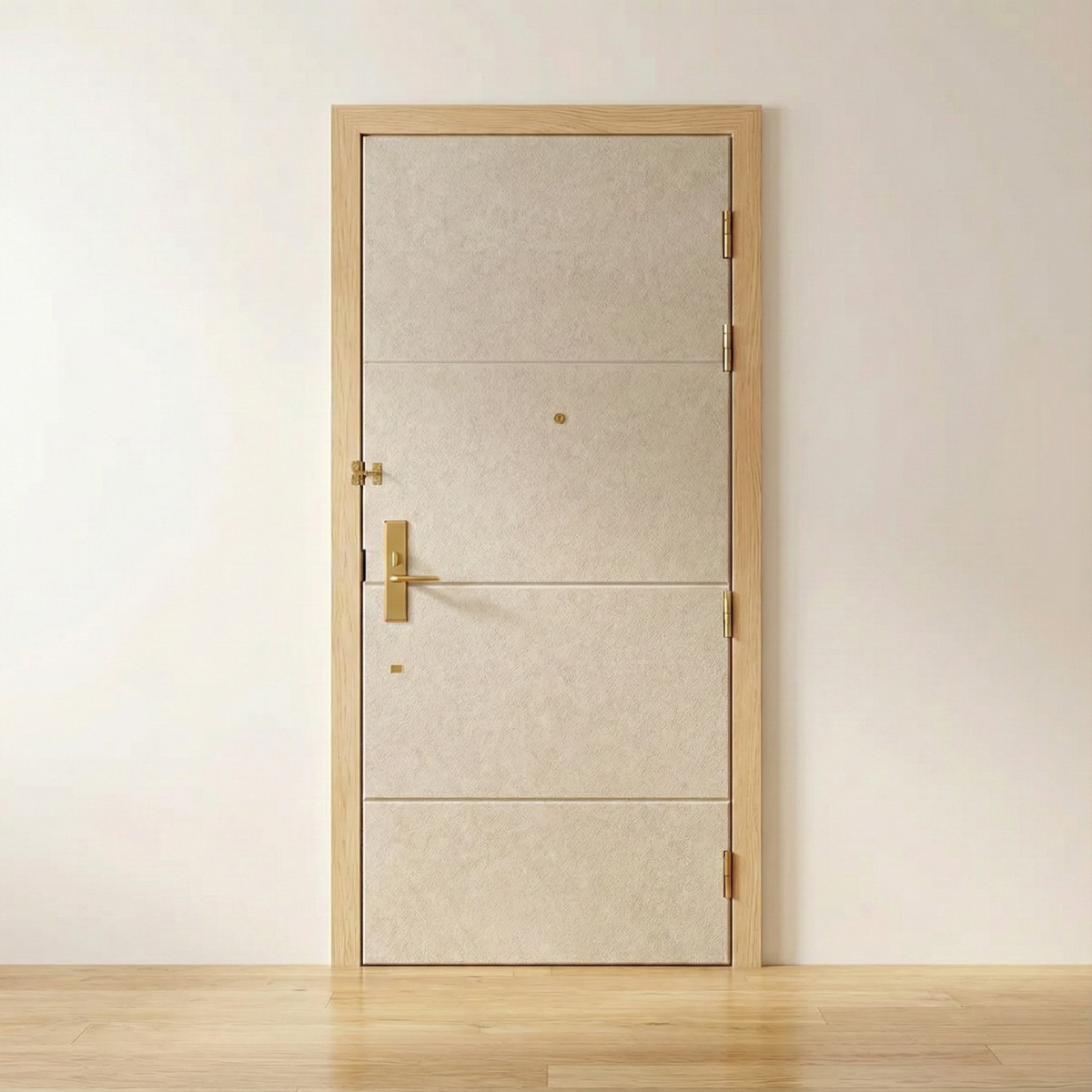
ENA Soundproof Door Set
5. Soundproof Doors: Enhancing Entrance Airtightness and STC Values
Standard indoor wooden doors are mostly of a hollow structure and leave ventilation gaps at the bottom, leading to easy sound penetration and leakage. For entrances, the acoustic indicator (STC) of the entire door frame and door leaf must be evaluated[4].
The interior of the ENA Soundproof Door Set is filled with a high-density soundproofing interlayer, enhancing the overall surface density. More crucially is its airtight design: the door frame is surrounded by multi-layer sealing rubber strips, and the door bottom features a built-in Automatic Door Bottom. When the door closes, the bottom drop automatically descends to seal the floor gap, blocking the path of airborne sound. This system is mostly used in conference rooms and recording spaces.
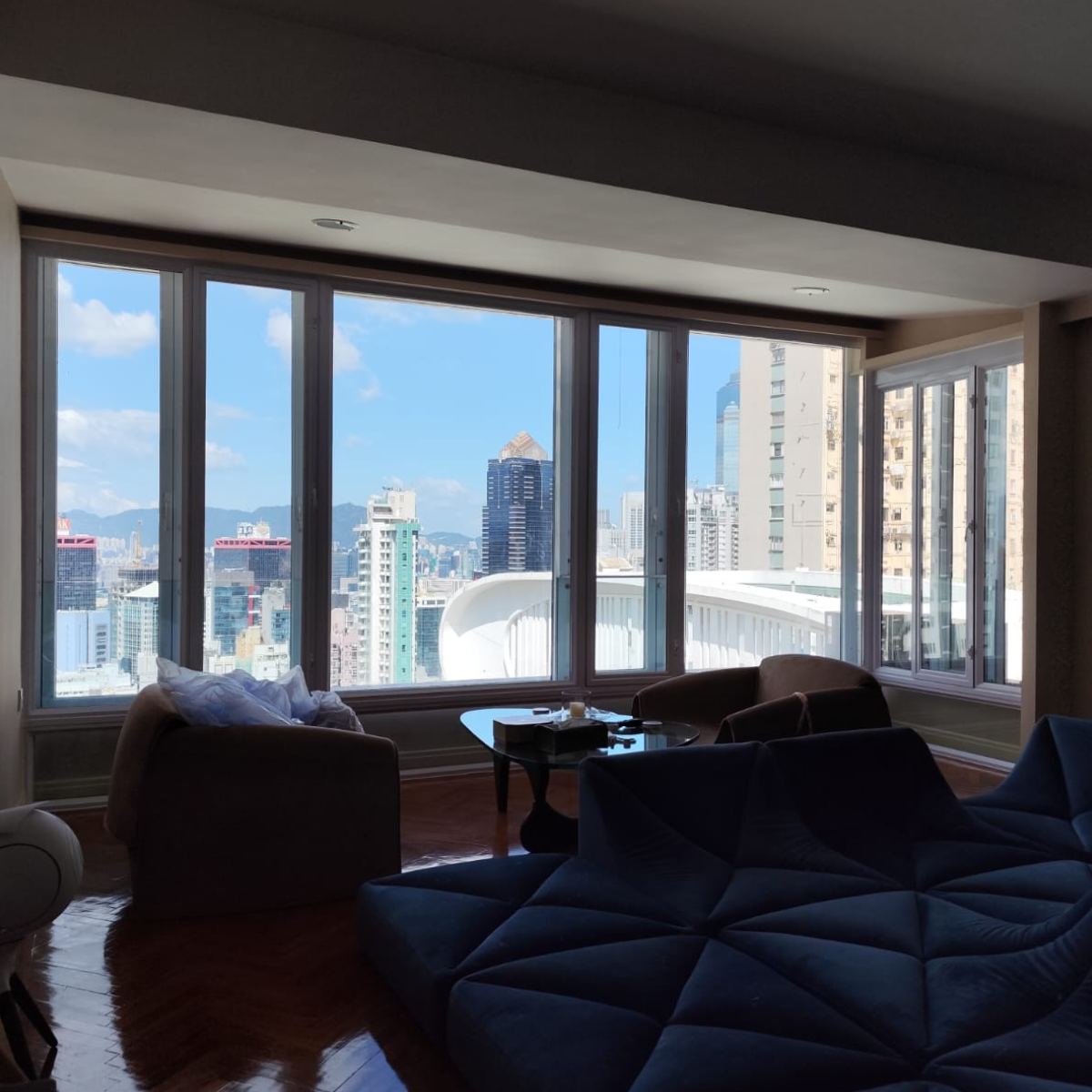
ENA Double-Glazed Window System
6. Double-Glazed Windows: Blocking Outdoor High-Frequency Traffic Noise
Facing high-decibel street traffic noise, the impedance capability of single-pane glass is limited. Replacing the window system to cut off the sound wave transmission medium from the source is a physical means of building noise prevention.
The ENA Double-Glazed Window System employs two panes of glass of different thicknesses, with a vacuum or inert gas injected in between. The configuration of different glass thicknesses can effectively avoid acoustic resonance (Coincidence effect) caused by a single frequency[5]. Combined with an airtight window frame design, this system can block external high-frequency noise from entering the interior.
7. Frequently Asked Questions (FAQ)
What is the difference in physical mechanisms between acoustic cotton and soundproof blankets?+
How to deal with movement sounds from upstairs neighbors?+
Where lies the difference in soundproofing effect between soundproof door sets and standard solid wood doors?+
What is the reason for the two panes of glass in double-glazed windows having different thicknesses?+
8. References
[1] ASTM International. (2017). ASTM C423-17: Standard Test Method for Sound Absorption and Sound Absorption Coefficients by the Reverberation Room Method.
[2] Bies, D. A., & Hansen, C. H. (2009). Engineering Noise Control: Theory and Practice (4th ed.). CRC Press. (Mass Law principles).
[3] International Organization for Standardization. (2020). ISO 717-2: Acoustics — Rating of sound insulation in buildings and of building elements — Part 2: Impact sound insulation.
[4] ASTM International. (2016). ASTM E413-16: Classification for Rating Sound Insulation (STC classification for doors and partitions).
[5] Quirt, J. D. (1982). Sound transmission through windows I. Single and double glazing. Journal of the Acoustical Society of America, 72(3), 834-844. (Coincidence effect in glazing).
© 2026 [Ivan Yip, ENA Acoustic]. All Rights Reserved.
1 comment
@Emily: 房間想隔音,應該用哪種物料會好一點?
如果本身已有牆身,可以考慮隔音毯 ENA EN-200 和表面用隔音棉 ENA NE-100。歡迎聯絡我們了解更多。